
Marrel skip bins, made as a container — not rented as a service
In Australia and New Zealand, a steel waste container with a hinged end gate and a mechanism that lets it discharge its load is commonly called a Marrel bin or Marrel skip bin. The name comes from the French lifting equipment maker that popularised the design, and it has since become the generic term across the trade here in the same way “hooklift” and “front lift” have.
That matters if you are buying rather than hiring. Most of what appears when you search for skip bins is a removal service — someone brings a bin, you fill it, they take it away. What we make is the bin itself: the steel body, the gate, the mechanism and the lifting points, for waste contractors, transfer stations, councils, quarries and manufacturers who own their containers and want to buy them outright.
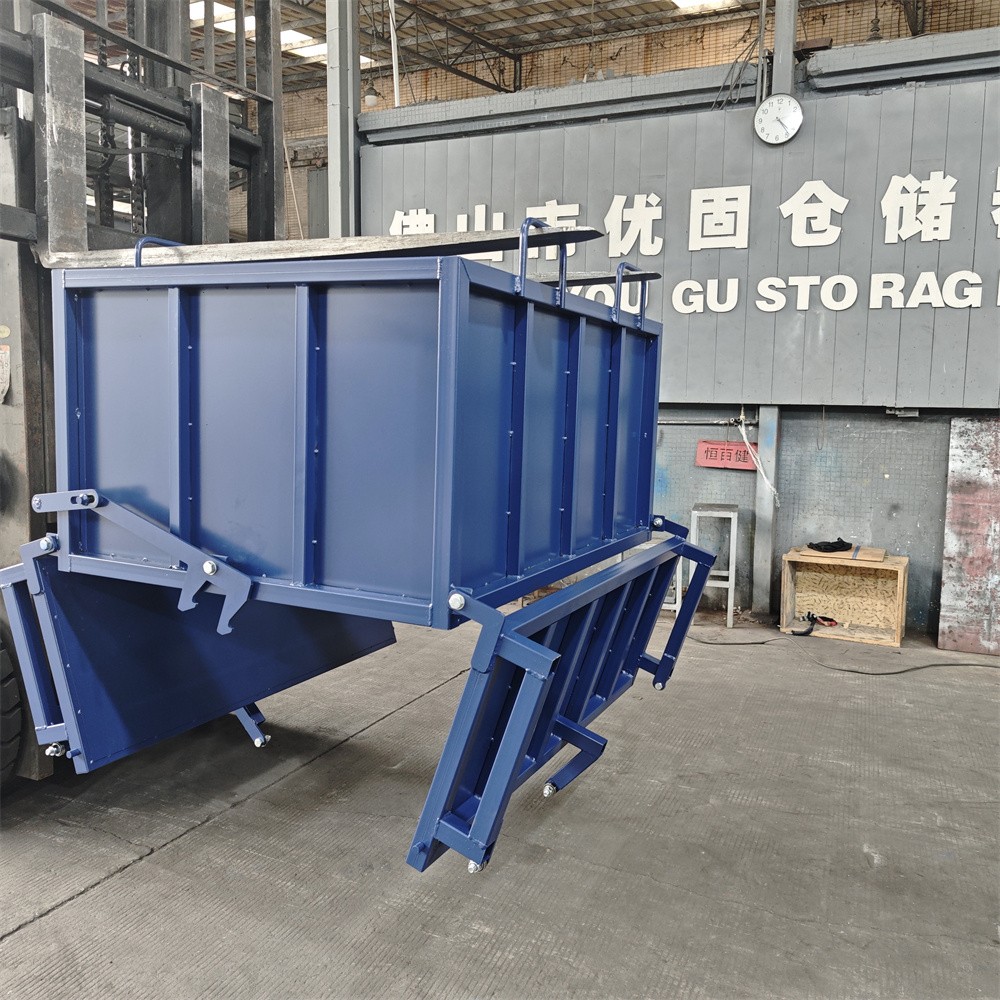
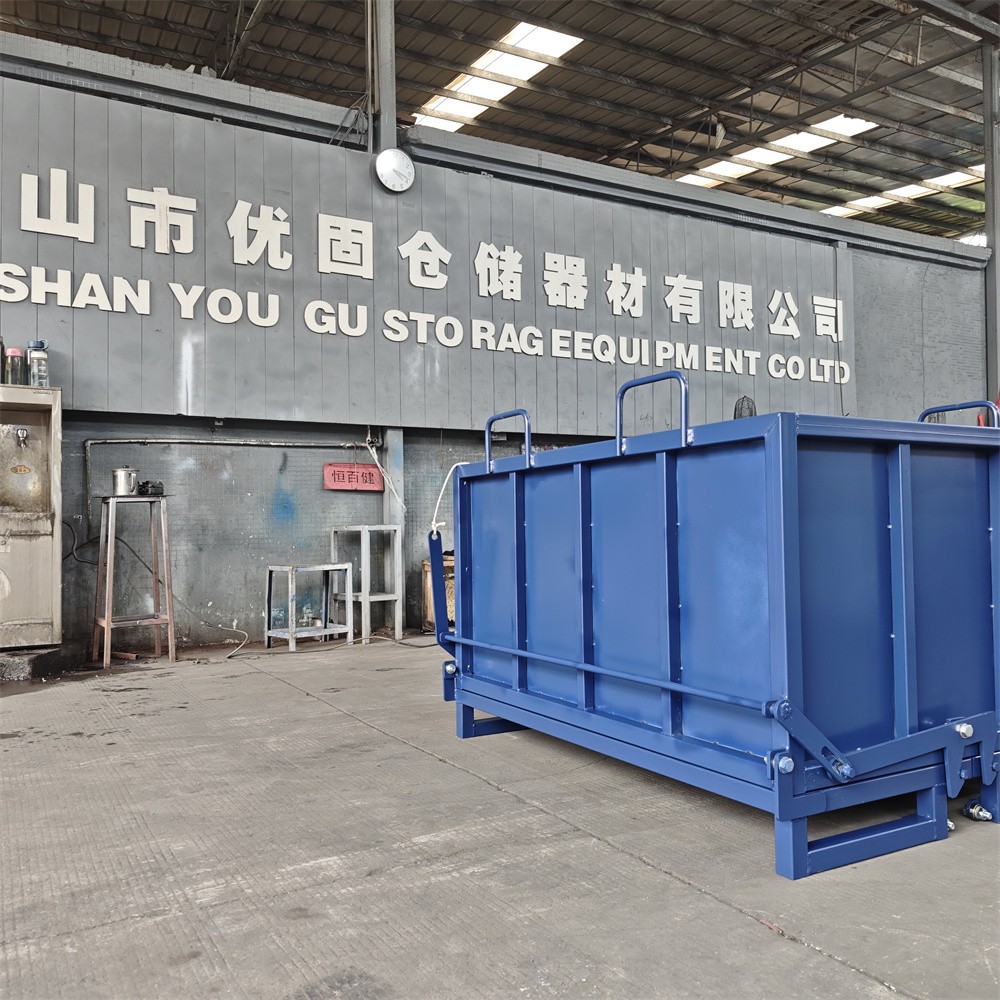
The two discharge types, and how to tell which you need
| Type | How it discharges | Fits |
|---|---|---|
| Drop bottom skip (Marrel type) | The floor splits and swings down, and the load falls clear | Wet, sticky or stringy loads that will not tip out — green waste, food waste, clay, slurry, scrap that bridges |
| Front lift bin | The bin is lifted over the front of the collection vehicle and tipped | Commercial and municipal waste where the truck does the work and the bin stays on site |
| Rear end gate / drop end | A full-height end gate releases and the body tips | Dry, free-flowing loads — general waste, cardboard, timber offcuts |
The drop bottom is the reason the Marrel type exists. A conventional skip with a tipping body relies on gravity to empty, and gravity does not move wet compost or clay. A drop bottom opens underneath, so the material has nowhere to hang up.
Sizes are quoted in cubic metres
Australian buyers order skip bins by volume, not by length and width. The sizes you will see quoted are 2 m³, 3 m³, 4 m³, 6 m³, 8 m³ and 10 m³, and the exact figure is usually written as “6 cubic metre skip bin” or “6m3 skip bin”.
| Volume | What it is normally used for |
|---|---|
| 2 m³ – 3 m³ | Small site clean-ups, green waste, a single renovation |
| 4 m³ – 6 m³ | The general-purpose commercial size; most contractor fleets are built around it |
| 8 m³ – 10 m³ | Bulk demolition, transfer station and quarry work |
Volume is nominal in this trade — a 6 m³ bin is a body size, not a guarantee that six cubic metres of wet clay will fit under the fill line. If you are buying against a weight limit rather than a volume, say so, because the body gauge and the floor stiffening change.
How we build them
- Body. Welded steel plate with external stiffening ribs, so the sides do not bow outwards under a heaped load.
- Drop bottom mechanism. Two floor leaves on heavy hinge pins, held closed by the lifting gear and released as the body is set down or lifted — the arrangement is set by the truck or hooklift you run.
- End gate. Full-height hinged gate with a positive latch, or a lift-out gate if the bin is also loaded by hand.
- Lifting points. Sized to your hooklift, skip loader or forklift, not a generic set of lugs.
- Finish. Hot-dip galvanised for anything handling green waste, food waste or salt-laden material; painted for dry general waste.
- Wear where it happens. The floor and the lower sides take the abrasion, so those are specified heavier than the upper panels rather than the whole body being one gauge.
Body sizes across the range fall within 500 – 6,000 mm and load ratings within 300 – 3,000 kg. Beyond that we quote from a drawing.
Plate body or mesh body
Most of what we build is solid plate. Mesh has a place, but it is the minority of the range, because waste handling is an abrasion problem rather than a containment problem.
| Body | What it suits | Where it falls down |
|---|---|---|
| Solid steel plate — our standard | Machine-loaded waste, wet or abrasive material, anything stored outdoors | Heavier, and you cannot see the contents without opening it |
| Welded mesh | Dry, light, hand-sorted waste where visibility matters | Material presses into the wire and works it at the welds — the cage starts shedding after enough cycles |
The deciding question is how the bin gets filled. Loaded by machine, or by a tipper dropping material in: plate. Loaded by hand with dry material: mesh is workable. A plate body also repairs — you weld a patch onto a worn floor rather than replacing a whole mesh panel.
Collapsible or rigid
Both types exist and both are worth understanding before you specify:
- Rigid, non-collapsible. The default for a working container. It holds its shape under a heaped load, has no joints to wear, and stacks or nests depending on the frame. This is what a contractor fleet usually runs.
- Collapsible. The sides fold or lift out so the empty body ships flat. The saving is on the return leg — it only pays if the bins travel empty rather than staying in service on one site.
For most buyers the collapsible question is a freight decision, not a product decision. If the bins are not going back on a ship, specify rigid and put the money into the floor gauge instead.
Big or small — the range in one place
We build the full spread rather than a catalogue of three sizes: small bodies for workshop and kitchen waste through to large transfer-station containers. What fixes the size is the volume per collection and the vehicle that lifts it, so give us those two numbers and the range narrows immediately.
Buying instead of hiring — when it makes sense
Hiring a skip is the right answer for a one-off clean-up. Owning containers starts to make sense when you are moving the same waste stream every week and paying a hire fee each time, or when the bin leaves your site full and comes back empty on your own truck.
The questions that decide it:
- How many containers are in service at once, and how often does each one leave site?
- Does the bin go on your own truck, or a contractor’s?
- What is the waste — dry, wet, heavy, or abrasive? This sets the gauge and the finish more than anything else.
- Does the load need to be weighed, and does the bin need a plate holder or ID panel for that?
- Is it stored outdoors in a coastal yard? Then galvanised, without argument.
Note on the name
We are not affiliated with Marrel and we do not sell Marrel-branded equipment. “Marrel bin” and “Marrel skip bin” are used here as the generic trade description for a drop-bottom steel waste container, which is how the term is used across Australia and New Zealand. If your specification names Marrel, tell us the reference and we will build to those dimensions.
Related products
- Steel drop bottom waste bin — Marrel-type skip container for wet and commercial waste
- Metal waste bin cage for recycling (YG-B07)
- Heavy duty metal rubbish box cage trolley
Frequently asked questions
What is a Marrel skip bin?
A steel waste container with a drop bottom — the floor splits and swings open so the load falls out from underneath. It is the standard design where the waste will not tip out of a conventional skip, such as wet green waste, clay or slurry. The name is generic in Australia and New Zealand and comes from the original French manufacturer.
What is the difference between a Marrel bin and a normal skip?
A normal skip is emptied by tipping the whole body. A Marrel-type bin is emptied by opening the floor underneath. For dry, free-flowing waste the difference is academic; for wet or sticky waste it is the difference between a bin that empties and a bin you have to dig out.
What size skip bin should I buy?
Buyers normally work in cubic metres — 2, 3, 4, 6, 8 or 10 m³. Choose by the volume of one week’s waste and by the vehicle that will lift it, and tell us if there is a weight limit as well, because that changes the floor specification.
Do you make front lift bins as well?
Yes. Front lift bins are the other common configuration in commercial and municipal collection, and they are built around the lifting geometry of the truck rather than a hooklift.
Can the bin be galvanised?
Yes, and for green waste, food waste or coastal storage we would recommend it. Painted bins in a wet waste stream start rusting at the floor seams, which is exactly where the structure is working hardest.
Do you supply to Australia and New Zealand?
Yes. Both are established markets for us, and we build to the local conventions — cubic metre sizing, drop bottom or front lift discharge, and hot-dip galvanised finish where the bin lives outdoors.
Post time: 2026-11-18 10:11:13 [sharethis-inline-buttons]
